If you own a home, design, or decor business, you have probably felt something change in the last year. Your Google traffic is softer. Fewer people say "I found you online." Your Instagram posts get likes that do not convert. Something shifted, but nobody told you what.
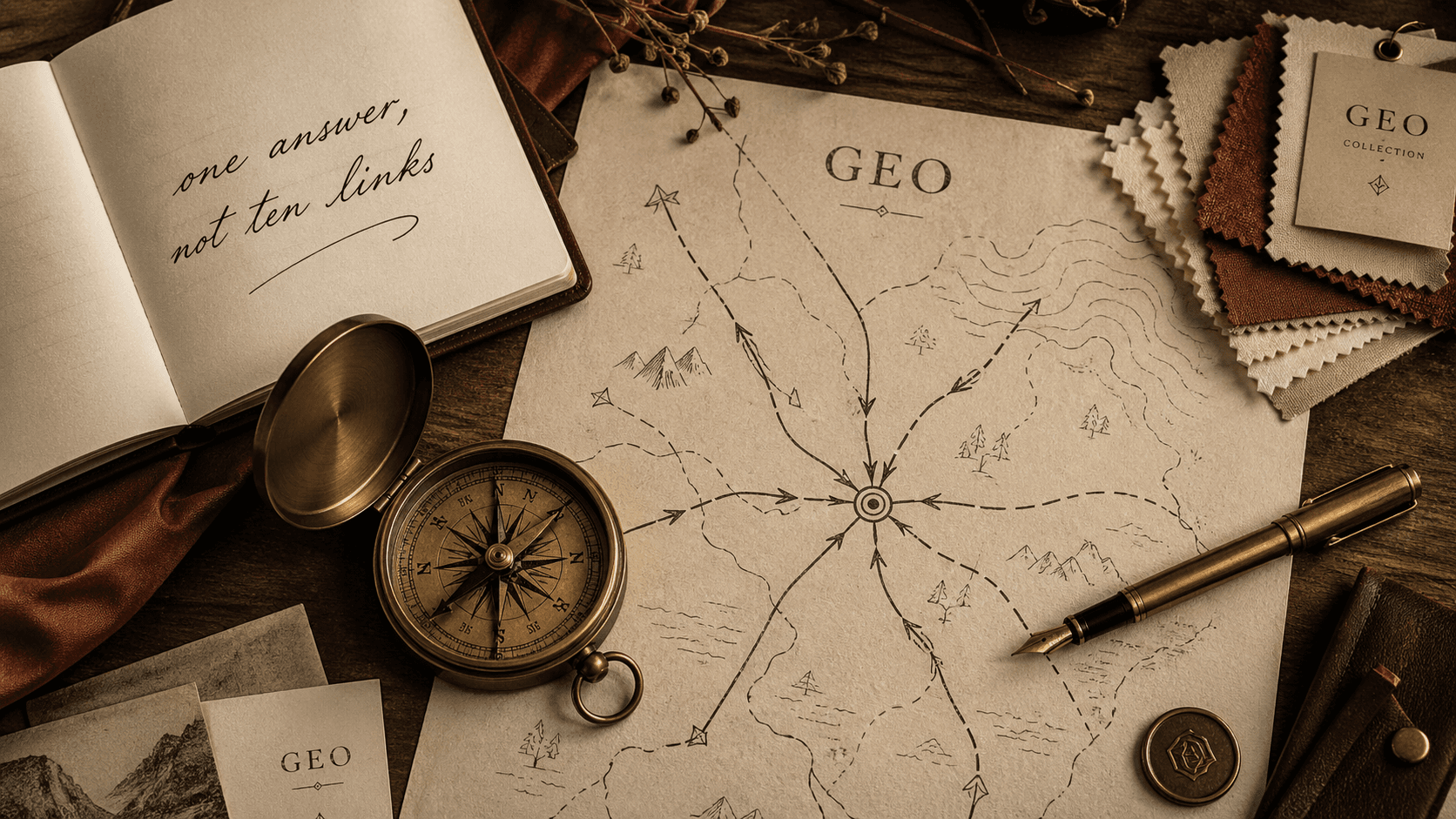
Here is what shifted: your customers started asking AI instead of Google. And AI does not return ten blue links. It returns one answer.
Generative Engine Optimization (GEO) is the practice of making your business that answer. It is the discipline of structuring your web presence, schema data, Google Business Profile, and citation network so that AI engines like ChatGPT, Google AI Overviews, Perplexity, and Gemini can find your business, understand what you do, and confidently recommend you by name.
Why GEO, and not just SEO?
Traditional SEO optimizes for a page of blue links. You target keywords, build backlinks, and fight for position three instead of position eight. When someone types "best kitchen remodeler near me," you want to rank higher than the competitor.
AI search does not have a page of results. A customer opens ChatGPT and asks the same question. The model reads the web, reasons about what it found, and writes a short answer that names one to three businesses. If you are not one of those names, you do not exist, no matter how well you rank on Google.
GEO is the layer that did not exist five years ago. It is what tells AI engines: this business is real, it does this specific thing, in this specific city, it has these reviews, it is recommended by these sources. Traditional SEO signals (authority, crawlability, content quality) still matter, but GEO adds a new layer on top.
The five signals AI engines trust
Every major AI search product (ChatGPT browsing, Google AI Overviews, Perplexity, Gemini) reads the same underlying web. They each weight things slightly differently, but they all look for the same core signals:
- Structured schema data. LocalBusiness schema, Service schema, FAQPage schema, and Review schema, embedded in your HTML, so the model can parse your business without having to guess.
- Entity clarity. Your business name, address, phone number, and category consistent across your site, GBP, and every major directory. When AI sees the same facts in five places, it treats them as true.
- FAQ-style content. Pages written as direct question-and-answer pairs, because that is exactly the format AI models prefer to quote.
- Google Business Profile completeness. Categories, photos, services, hours, Q&A, and post cadence, all filled in and kept fresh. GBP is the single strongest local AI signal.
- Citation and review velocity. Mentions in local publications, industry directories, and a steady stream of new Google reviews signal "this is a real, active business" to every AI model.
Why most home and design businesses have none of this
Because nobody built it. Your website was made by a friend in 2017 or by a generic agency that installed a template. Schema markup was optional, so they skipped it. Your GBP was claimed and forgotten. Your FAQ page is three generic questions that nobody would ever actually ask.
None of this is your fault. The AI search shift happened in under eighteen months. Most marketing agencies are still selling the playbook that worked in 2019.
What GEO actually looks like, in practice
A Prompting Logic engagement installs the five signals above in a specific order:
- Week 1: schema markup, URL cleanup, sitemap, Search Console, GBP audit.
- Month 1: FAQ architecture, service area pages, testimonials with review schema, directory listings, two AI-optimized blog posts.
- Month 2 through 12: ongoing content at a steady cadence, review generation, backlink development, quarterly AI visibility reports showing where you appear in real AI answers.
The work is not glamorous. It is a list of unsexy, specific fixes. But each one compounds, and the compounding is what earns you AI citations that are very hard for late movers to reverse.
Who should care about GEO right now
If your business depends on local customers finding you online, and you have more than three competitors in your market, you should care about GEO right now. That is most home, design, and decor businesses across the US.
The businesses that build AI visibility in 2025 and 2026 will own their market in AI search for the next decade. The ones that wait will spend twice as much catching up, to competitors who got there first. The window is open. It will not be forever.
Want to see where you stand? The free Quick Audit takes about 60 seconds of your time and tells you exactly what AI knows about your business today.